

Our Blog

What are the benefits of Invisalign®?

October 21st, 2020

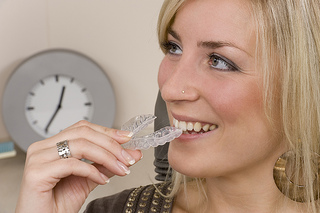
A popular option for straightening teeth at Buttermilk Dentistry, Invisalign can be a great method for improving your smile, and can help patients with crowded teeth, crossbites, overbites, underbites, and more.

Invisalign, which is different from traditional braces, works by applying a series of clear, retainer-like aligners in order to eventually move your teeth into their ideal positions. Patients typically swap aligners approximately every couple of weeks.

At Buttermilk Dentistry, we have lots of experience using this technology to give our patients the beautiful and healthy smile they’ve always wanted. During your initial visit at our Crescent Springs office, the first thing we do is take an impression of your teeth as they are now and digitize it. Using special software, we look at the current positioning of your teeth and compare it to the way your teeth should look.

Not only are the aligners invisible, they are also removable, so you can eat and drink what you want, and brushing and flossing are easier. Invisalign’s aligners are also comfortable, with no metal to cause mouth abrasions during your treatment. And, no metal and wires usually means you spend less time at our office getting adjustments. With Invisalign, you can view your own virtual treatment plan when you start, so you can see how your straight teeth will look when your treatment is complete!

Depending on the severity of the problem, Invisalign treatment may take anywhere from three to 18 months to complete. You should be aware that Invisalign is not as effective as traditional braces in treating bite problems, teeth that are lower or higher than others, or severely overcrowded teeth. Both teens and adults are now great candidates for Invisalign, so we invite you to contact our Crescent Springs office to set up an initial consultation and learn more on how Invisalign can give you the smile you’ve always wanted!

The Purpose of a Dental Crown

October 14th, 2020

A dental crown, otherwise known as a cap, covers an infected tooth and can vary in function, depending on the position of the tooth. Crowns cover all the visible parts of a tooth and vary in size, appearance, and functionality.

A crown can be used to protect a weak tooth from breaking, hold together an already broken or worn tooth, cover the tooth with a large filling or dental implant, hold a dental bridge in place, or support a cosmetic modification.

Several types of crowns are available, depending on the tooth to be treated. Stainless-steel crowns are used on permanent teeth, usually as temporary measures in children because they’re more cost-effective for baby teeth that naturally come out over time.

Metal crowns are another option that includes gold alloys, or base-metal alloys. Metal crowns are notable for their ability to withstand biting forces, rarely break or chip, and therefore offer the best results in terms of normal wear and tear.

Porcelain fused to metal crowns most closely resemble a normal tooth and are a good choice for front or back teeth. Other, less common types include all-resin, all-ceramic, all-porcelain, and zirconia crowns.

If you’re getting a crown, you can expect a few things during your visit with Dr. Pohl. Crown placement usually requires two appointments. The first entails preparation to get an impression of the tooth, shape it, and place a temporary crown. The impression is sent to a lab where a technician makes the crown to be fitted.

During the second appointment, the high-quality porcelain crown is placed on the problematic tooth.  

If you notice any signs of discomfort in your mouth, always let Dr. Pohl know by calling our Crescent Springs office. We will determine which type of crown is best for your tooth to give it the added strength it needs. Crowns can be very helpful for your oral health if you have any teeth that need extra support.

Invisalign® Q&A

September 30th, 2020

It’s estimated that up to four million people at any one time are wearing braces in the United States and Canada. But Dr. Pohl and our team at Buttermilk Dentistry know that braces have come a long way from the early days of orthodontics, so much so that these days, options are available that are not visible to onlookers. The most popular of these “invisible” braces is Invisalign. Here’s a list of FAQs regarding Invisalign:

Are they really invisible?

Yes, the clear liners are virtually invisible, so they enable patients to feel good about themselves and their appearance, while getting the orthodontic treatment they need.

Are there wires, rubber bands, and brackets with Invisalign?

Nope. Invisalign is truly an alternative to conventional braces. The treatment consists of clear liners that can easily be removed and cleaned throughout the day. There are no wires, so there’s less poking and mouth irritation compared to braces. There’s also no wire tightening at adjustment appointments, so patients don’t have to worry about a sore mouth in the days that follow in-office visits.

I’ve heard that if I get braces, I won’t be able to eat certain foods like popcorn and hard candy. Is this true with Invisalign too?

No. With Invisalign, there are no food restrictions. You simply remove your aligners when you’re eating, and replace them after you’ve finished and brushed any leftover food particles away.

Does Invisalign cost more than braces?

While overall cost varies on a patient-by-patient basis and is based largely on the level of treatment, Invisalign costs about the same as traditional braces, which makes this treatment option a truly affordable alternative.

How does brushing compare with conventional braces?

Brushing your teeth while wearing conventional braces takes some getting used to. Patients have to brush around the metal brackets and floss with a specialty tool to get into the hard-to-reach areas of the mouth. By contrast, Invisalign can be removed at any time to permit regular brushing and flossing.

Every patient is different and Invisalign might not be the best course of orthodontic treatment for everyone, but it's an option that's gaining more and more popularity, and it's an orthodontic alternative that doesn't sacrifice comfort and convenience for results. For more information, or to schedule a consultation, please give us a call at our convenient Crescent Springs office!

Navigating the World of Dental Insurance Terminology

September 23rd, 2020

Unless you work for an insurance company, you probably do not spend a lot of your time studying all the terminology that dental insurance companies use to describe the treatments and services they cover. If it seems pretty confusing, here are some of the most commonly used dental insurance terms and what they mean.

A Basic Glossary

Annual Maximum–The maximum amount your policy will pay per year for care at Buttermilk Dentistry. It is often divided into costs per individual, and (if you are on a family plan) per family

Co-payment– An amount the patient pays at the time of service before receiving care, and before the insurance pays for any portion of the care

Covered Services– A list of all the treatments, services, and procedures the insurance policy will cover under your contract

Deductible– A dollar amount that you must pay out of pocket each year before the insurance company will pay for any treatments or procedures

Diagnostic/Preventive Services– A category of treatments or procedures that most insurance will cover before the deductible which may include services like preventive appointments with Dr. Pohl, X-rays, and evaluations

In-Network and Out-of-Network– A list of providers that are part of an insurance company’s “network”

  • If you visit in-network providers, the insurance company will typically cover a larger portion of the cost of the care you receive. If you visit someone who is not part of the network, known as an out-of-network provider, the insurance company may pay for a portion of the care, but you will pay a significantly larger share from your own pocket.

Lifetime Maximum– The maximum amount that an insurance plan will pay toward care for an individual or family (if you have an applicable family plan)

  • This is not a per-year maximum, but rather a maximum that can be paid over the entire life of the patient.

Limitations/Exclusions– A list of all the procedures an insurance policy does not cover

  • Coverage may limit the timing or frequency of a specific treatment or procedure (only covering a certain number within a calendar year), or may exclude some treatments entirely. Knowing the limitations and exclusions of a policy is very important.

Member/Insured/Covered Person/Beneficiary/Enrollee– Someone who is eligible to receive benefits under an insurance plan

Provider– Dr. Pohl or other oral health specialist who provides treatment

Waiting Period– A specified amount of time that the patient must be enrolled with an insurance plan before it will pay for certain treatments; waiting periods may be waived if you were previously enrolled in another dental insurance plan with a different carrier

There are many different insurance options available, so you need to find out exactly what your insurance covers. It’s important to review your plan with a qualified insurance specialist. Don’t be afraid to ask questions about the policy so you can understand it fully and be confident that you know everything your policy covers the next time you come in for treatment at our Crescent Springs office.