Our Blog

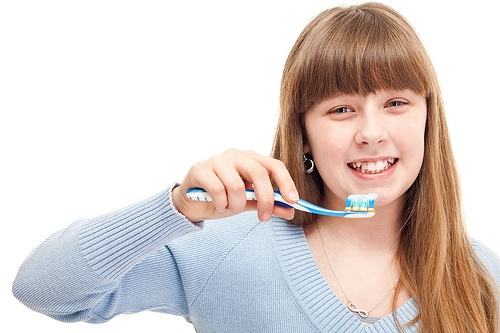
Can my child really avoid tooth decay?

August 7th, 2019

Great question! Yes, in fact, tooth decay is preventable! Decay, which is caused by sugars left in your child’s mouth, can turn into an acid, which in turn can break down his or her teeth. Children are at high risk for tooth decay for a simple reason: many children and adolescents tend to be lax in their oral hygiene habits.

So, how can your child prevent tooth decay?

  • Start early. After the age of two, brush your child’s teeth with fluoride toothpaste twice a day. And, if possible, clean between the teeth with dental floss at least once a day, preferably before they go to bed.
  • Don’t allow your little ones to eat after cleaning teeth at bedtime, as salivary flow decreases while they sleep and their teeth become vulnerable to cavities.
  • Do not allow your little ones to nibble food or sip drinks continuously, and keep in mind that a low-sugar diet also helps keep tooth decay at bay. Allow time between meals for saliva to neutralize acids and repair the teeth.
  • Drinking water frequently throughout the day can also reduce the possibility of new cavities forming.
  • Dental sealants can also protect your children’s teeth from cavities. Sealants, which are applied to the chewing surfaces of molars, act as a shield between the tooth and harmful bacteria.

Finally, make sure your child visits Buttermilk Dentistry approximately every six months for a checkup and routine cleaning! Please give us a call at our Crescent Springs office.

Eating and Invisalign®

July 17th, 2019

One of the greatest advantages to using Invisalign is that it provides maximum results with minimal impact on your everyday life. Invisalign is comfortable, easy to insert, and simple to remove. Because you can remove Invisalign aligners, you can enjoy all your favorite foods and beverages without worries about getting food stuck in the wires and brackets of traditional braces.

Eating and Invisalign

While the aligner is durable and strong, you should remove it before you eat or drink beverages, as the chewing action inside your mouth can break, crack, or distort the aligner. Even minute damage to the Invisalign tray will prevent it from aligning your teeth properly. Furthermore, eating with Invisalign in your mouth can be quite messy.

Beverages and Invisalign

Repeated exposure to hot liquids may also cause the Invisalign aligner to distort. This distortion changes the shape of your aligner in a way that will affect how it straightens your teeth. Contact our Crescent Springs office if your Invisalign aligner has distorted after consuming a hot beverage.

Fluids can settle inside the aligner to “bathe” the teeth. Bathing teeth in acidic fluids can be especially problematic, as the acids can wear away tooth enamel. Exposure to acidic fluids is not normally a problem, as saliva neutralizes and buffers the acid then washes it away. Wearing an aligner, however, prevents the saliva from doing those jobs, increasing your risk for tooth decay.

Colored drinks may also change the color of your teeth. Most discoloration is temporary but stubborn stains may occur.

To prevent discoloration and tooth decay, brush your teeth after every meal or beverage before putting in your Invisalign aligners. If you do not have access to clean water, chew sugar-free gum to remove bacteria, acid, and food particles from your teeth. As a last resort, you may leave your aligners out for an hour or two until you can brush and floss properly. Before inserting Invisalign, rinse the aligner in lukewarm water or use the Invisalign cleaning kit.

Contact our Crescent Springs office for more information about eating and Invisalign.

Regular Cleanings Lead to Healthier Mouths and Bodies

July 10th, 2019

The American Dental Association and dentists everywhere, including our own Dr. Pohl recommend that you schedule an appointment every six months for a cleaning and checkup. Despite this universal recommendation from the experts, some people believe regular cleanings and checkups are unnecessary unless there is something wrong with your teeth—for example, a cavity or a toothache. In fact, coming in for a six-month checkup and cleaning is one of the most important things you can do for your oral health, as well as your overall health.

Why It’s Important to Visit Regularly

Numerous studies have shown that oral health is closely tied to the overall health of your whole body. In fact, having a healthy mouth can help the rest of your body stay in balance. On the other hand, an unhealthy mouth can cause all kinds of problems for you down the road.

One of the most important things we do at Buttermilk Dentistry when you come in for cleanings is remove plaque that has collected on your teeth and around your gums. If left untreated, plaque build-up can cause inflammation and irritation around your gums, and lead to gum diseases like gingivitis and periodontal disease.

According to the American Academy of Periodontology, periodontal disease has been linked to increased risk for serious health conditions such as heart disease, stroke, diabetes, inflammation, osteoporosis, and pregnancy complications.

Most oral health issues will begin with subtle changes before progressing into more serious conditions. If you visit us for regular checkups, we may be able to identify common indicators that could lead to larger issues down the road. If we only see you at our office every few years, it becomes more difficult to catch these conditions before they grow into bigger and more painful problems.

What happens at a dental checkup?

When you come in for your regular checkup, there are several things our dentists and hygienists may do, including:

  • Take X-rays to determine the overall health of your teeth, jaw, bones, and the tissue surrounding your teeth, including a check for early signs of tooth decay, abnormal growths, cavities, and other damage that is not immediately visible
  • Perform a thorough cleaning of your mouth and teeth to remove any excess plaque and tartar, then polish and floss your teeth
  • Check for signs of gum disease or evidence of tooth decay
  • Examine your bite, and look for broken or damaged teeth
  • Identify any changes to your gums or teeth since your last visit
  • Examine your head and neck for signs of oral health problems

Waiting to visit Dr. Pohl until you already have a problem, like a cavity, is like waiting to put gasoline in your car until after you run out and your vehicle is stalled on the side of the road. Once you have a problem, the ripple effect can cause you a lot of pain, take considerably more time, and cost a lot more money to fix than if you had come in for preventive care and cleanings every six months.

References: American Academy of Periodontology (2012). Gum Disease Links to Heart Disease and Stroke. Retrieved from http://www.perio.org/consumer/mbc.heart.htm


Happy Fourth of July!

July 3rd, 2019

Happy Independence Day from Dr. Pohl and team! The Fourth of July celebrations in America may have changed a lot over the years, but there is no doubt that we Americans love to celebrate the anniversary of our country's independence! Today we're devoting the Buttermilk Dentistry blog to some fun facts about the Fourth!

  • My, how we have grown! This year the United States Census Bureau estimates that our country has 313.9 million residents celebrating the Fourth of July this year, but back in 1776 there were just 2.5 million members of the country.
  • Our country loves to show how proud that we are of our independence. Did you know that there are 31 United States places with the word “Liberty” in their names? The state of Iowa actually has four towns with the word Liberty in the name: Libertyville, New Liberty, North Liberty, and West Liberty.
  • The United States loves Fourth of July food! It is expected that around 150 million hot dogs are eaten on the Fourth each year. One of the Fourth's most popular sides, potato salad, goes just perfectly with the hotdogs and hamburgers that are standard Fourth of July fare. Some people choose potato chips instead, but we wouldn't have such a plethora of potatoes if not for the prodigious production of the states of Idaho and Washington -- they provide about half of all the potatoes in the United States today!
  • Americans love celebrating the Fourth outdoors: About 74 million Americans fire up their BBQ grill every Fourth of July.
  • The Chinese contribution: Did you know that Americans have spent more than $211 million on fireworks that were imported from China?

No matter how your family chooses to celebrate the Fourth, stay safe, take precautions, and don't forget to brush after your fabulous Fourth feast!